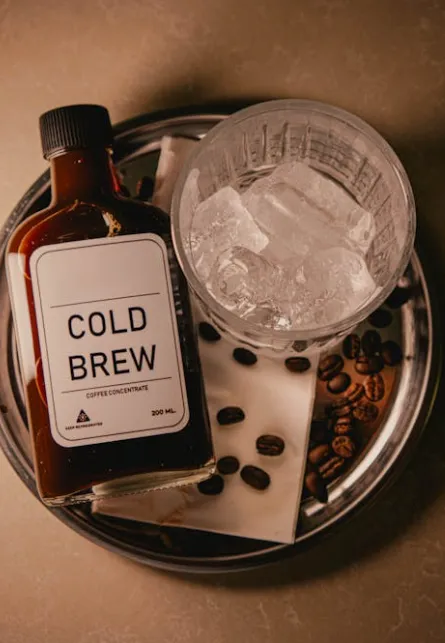
What Is Cold Brew?
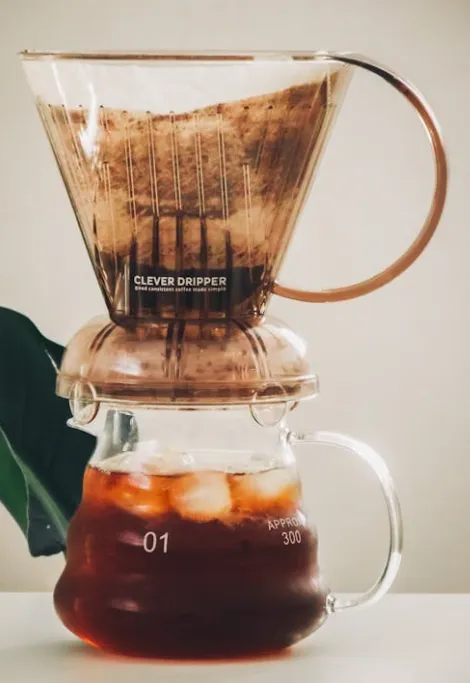
Cold brew is coffee made without heat. Coarsely ground beans sit submerged in cold or room-temperature water for 12 to 24 hours, then get filtered. No kettle, no espresso machine, no pressure — just time doing the extraction that boiling water accomplishes in minutes.
The drink that comes out is different at a chemical level. Cold water is a slow, selective solvent. The bright acids and volatile aromatics that a 92°C pour-over pulls out in four minutes extract very slowly or not at all in cold water. What you get instead is a cup built on heavier compounds — body, chocolate, caramel, maltiness — often described as round, smooth, or cola-like, depending on the bean and how long it steeped.
It is not "leftover hot coffee that went cold." That is iced coffee, a different drink. Cold brew was never hot to begin with.
Concentrate vs Ready-to-Drink
Cold brew is made in two ways, and knowing which one you are dealing with — or making — matters for how to serve it.
Concentrate uses a higher coffee-to-water ratio (typically 1:4 to 1:6 by weight). The result is strong, almost thick, and meant to be diluted before drinking. Most cold brew sold in bottles at South African cafés and in stores is a concentrate. Dilute roughly 1:1 with water or milk before drinking, then adjust to taste. Drinking it undiluted is not wrong, but it is very strong and quite caffeinated per millilitre.
Ready-to-drink uses a lower ratio (1:8 to 1:12). The result is closer to drinking strength — pour it over ice and drink. You lose some of the fridge-batch efficiency (a concentrate stretches further) but gain the ability to pour and drink immediately with no measuring.
If you are making cold brew at home for the first time, starting with a 1:6 ratio and diluting to taste gives you more flexibility than committing to a single ready-to-drink strength.
Why the Flavour Is Different
Heat is aggressive. A 90°C pour-over pulls out acids, floral aromatics, and brightness in minutes. Cold water moves slowly and extracts a narrower range of compounds — which is why the same bag of beans can taste sharp as a filter and soft and sweet as cold brew.
That "smoothness" people describe is mostly reduced perceived acidity. The cup can taste almost sweet without added sugar because the sharpness that registers as acidity on your tongue is substantially reduced. Chlorogenic acids, which break down into bitter by-products under heat, extract far less aggressively in cold water.
Bitterness is still possible — it appears if you steep too long, use too fine a grind, or squeeze the filter when straining. Each of those forces different compounds through than a clean, gravity-filtered pour.
Cold Brew in South Africa
Cold brew is not a novelty import anymore. It sits on the menus of most speciality cafés in Cape Town, Johannesburg, and Durban alongside iced americanos and batch-brew filter — sometimes bottled for takeaway, sometimes poured to order over ice.
The takeaway bottle format fits South African commuter and office culture well: you make a litre or two on Sunday evening, keep it in the fridge, and it is ready through the week without touching an espresso machine. In summer it is everywhere; in winter it stays in the fridges of people who have made it a daily habit.
Home brewing picked up noticeably during load-shedding years — a cold brew batch made before a scheduled outage keeps perfectly in the fridge without needing power to serve. Not the worst workaround for a country that relies on electricity for kettles and espresso machines.
Cold Brew vs Iced Coffee
They look similar in the glass but are entirely different processes. Cold brew was never hot; iced coffee was brewed hot and chilled. The taste, caffeine, and best-use-case differences are real — full detail in cold brew vs iced coffee.
Storing and Serving
Cold brew keeps well when handled simply:
- Store in a sealed glass container in the fridge. BPA-free plastic works but glass is better for longer storage.
- Plain black cold brew (no milk added) stays good for 7–10 days. Once you add dairy or flavoured syrup, drink within 2–3 days — dairy cultures fast.
- If the batch smells flat, sour, or off, discard it. Coffee oils go rancid with time and exposure.
Serve over ice, straight from the fridge, or diluted with water. Oat milk and full-cream dairy both work; oat's natural sweetness means you may need less dilution when using it compared to water. Starting at 1:1 concentrate-to-liquid and adjusting from there is easier than guessing a fixed ratio — every batch and every bean behaves slightly differently.
The Three Guides
These three pages cover everything in practical detail for anyone making cold brew at home or trying to understand the drink better:
- How to make cold brew — Ratios, grind, steep time, filtering, and how to use your concentrate.
- Cold brew vs iced coffee — Taste, caffeine, ordering at cafés, and making each at home.
- Best coffee for cold brew — Roast, origin, processing type, freshness, and what to look for when buying.
For espresso and milk drinks, our cappuccino guide covers what that category is and how it differs from a cold-steeped batch.
Frequently Asked Questions
Is cold brew less acidic than regular coffee?
Generally yes in the cup — cold water extracts fewer of the volatile acids that make hot coffee sharp. Most people who find black hot coffee hard on the stomach tolerate cold brew more easily. Individual batches vary with bean and steep time, but the difference is measurable, not just marketing.
Is cold brew the same as cold drip?
No. Cold drip (Dutch coffee, tower coffee) drips cold water slowly through a column of grounds over several hours — usually a deliberate, slow process with specialised equipment. Cold brew is an immersion method: grounds sit in water the whole time, then get filtered out. Cold drip tends to taste cleaner and brighter; cold brew tends to be fuller and heavier.
Can you make cold brew with espresso beans?
Yes. Any coffee can be cold-brewed. Espresso blends designed for sweetness and body in milk often translate very well to cold brew for the same reasons — they are built for balance rather than extremes. You are not locked into a specific product.
How long does cold brew last in the fridge?
Plain black cold brew in a sealed container: 7–10 days. With milk or syrup already added: 2–3 days. The enemy is oxygen and dairy, not the brew itself. Use a container that seals and does not let the coffee sit open.
How much caffeine is in cold brew?
It depends entirely on the ratio and dilution. A concentrate at 1:6, diluted 1:1 before drinking, lands roughly in the range of 100–160 mg caffeine per 250 ml serving depending on the bean. Ready-to-drink cold brew at 1:10 is lighter. Undiluted concentrate can be very high per millilitre — this is what catches people off guard when they drink concentrate straight.