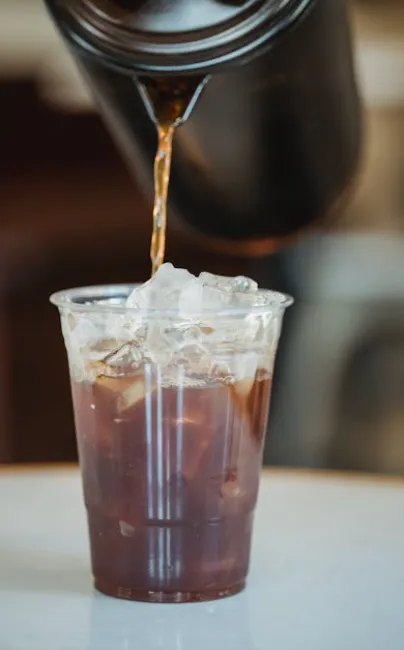
The question is not "what is the best coffee for cold brew" in the abstract — it is "what survives a long cold steep and still tastes like something worth drinking." Cold water is a slow, selective solvent. It rewards certain types of coffee and quietly punishes others.
What Cold Water Actually Does
Heat extracts rapidly and broadly. A 92°C pour-over pulls out acids, volatile aromatics, sugars, and bitterness compounds in under five minutes. Cold water, given 12 to 24 hours, extracts a narrower chemical range — more of the heavier, less-volatile compounds (melanoidins, certain sugars, oils) and less of the bright acids and floral aromatics that make a hot cup vivid.
The result: the same bag of beans can taste floral and acidic as a hot filter and flat, chocolatey, and smooth as cold brew. That is not a failure — it is just what cold water does. The question is whether the coffee has anything interesting left after the brightness is dialled back.
Coffees that have body, sweetness, and chocolate or caramel character tend to thrive in cold brew. Those compounds survive the cold extraction and translate to the cup.
Coffees built primarily on delicate florals, bergamot, lemon zest, or very high acidity often taste muted or thin. There is nothing wrong with them as coffee — they are just designed to shine in hot formats.
Roast Level
This matters more for cold brew than for many other brew methods because you cannot compensate with water temperature.
Light roast: Solubility is lower — light roasts are denser, and cold water has a harder time extracting from them in the same time window. You can compensate with a finer coarse grind, a longer steep (up to 24 hours), or a slightly higher coffee-to-water ratio, but you are fighting the method. Light roasts with strong fruit or floral character often taste muted cold, and the effort to extract them fully can tip into sourness if the balance is off. They are not impossible, but they require more dialling-in.
Medium roast: The most versatile for cold brew. Enough solubility to extract cleanly in a standard 16–20 hour steep, and typically enough sweetness and body to read well cold. This is the range that gives you the chocolate, caramel, nut, and brown-sugar notes that people associate with good cold brew.
Medium-dark roast: Works well as long as you do not over-steep. The deeper roast compounds (dark chocolate, molasses, toffee) translate very effectively cold. The risk is that the same roast character that makes a cup taste rich at 16 hours can taste bitter and smoky at 22 hours on a warm day. Keep steep times tighter and dilute more freely.
Dark roast / French roast / Italian roast: Technically works, but the margin for error is smaller. Over-steep by a few hours and you get a bitter, rubbery, or ashy result. If dark roast is what you have, shorten steep time to 12–14 hours maximum and dilute generously. Some people enjoy dark-roast cold brew as a deliberate style — very concentrated, very strong — but it is not the easiest place to start.
Processing: Washed, Natural, and Honey
Processing refers to how the coffee cherry was dried and the fruit removed from the bean before roasting. It affects flavour significantly, and those effects behave differently in cold brew.
Washed (fully washed): The fruit is removed before drying, leaving the bean to absorb moisture more cleanly. Washed coffees tend to taste clean, consistent, and origin-forward — you get the bean's character more clearly. In cold brew, washed coffees give clear, balanced results that are easy to dial in. Ethiopia Washed, Kenya AA, Colombia washed — all tend to translate reliably, though very high-acid Kenyan coffees can taste thin cold if the acidity is not balanced by body.
Natural (dry processed): The whole cherry dries on the bean for weeks before processing. This builds fruit-forward, wine-like, sometimes boozy or jammy flavour into the bean. In cold brew, naturals can be excellent — the fruit and chocolate from the processing translates to rich, complex batches — or they can taste fermented and odd if the natural process was inconsistent or the steep was too long. Ethiopia Natural and Brazil Natural are common examples. Start with 14–16 hour steeps and taste before committing to a full filter.
Honey processed: A middle path — some fruit is left on during drying, adding caramel, stone fruit, and sweetness to the bean. Honey-processed coffees often perform very well in cold brew: enough sweetness and body to read well cold, without the ferment risk of a natural. Costa Rica Honey, Guatemala Honey, and similar profiles are among the most consistent performers in cold brew.
Origin: What Works and What Does Not
Brazil: The default cold brew starting point for many people for good reason. Brazilian naturals give low acidity, heavy body, chocolate, peanut, and brown-sugar notes — everything cold brew rewards. Forgiving to steep, easy to dilute, and consistent across batches.
Colombia: Washed Colombian coffees tend to be balanced, sweet, and medium in acidity — exactly the profile that translates well. Caramel, red apple, nougat notes are common. Reliable and widely available.
Guatemala / Honduras: These Central Americans often carry dark chocolate, walnut, and stone fruit. Good body, moderate acidity. Both translate well to cold brew and are often overlooked in favour of the default Ethiopia or Brazil options.
Ethiopia Washed: Bergamot, jasmine, tea-like florals — these are the hallmarks, and they do not always survive the cold steep. You lose the high aromatics and may end up with something thin and floral-in-a-muted-way. Some people love washed Ethiopian cold brew precisely for that tea quality; others find it disappointing compared to the hot version. Worth trying but not the most predictable performer.
Ethiopia Natural: Blueberry, red wine, chocolate — when the processing is clean, cold brew from natural Ethiopian can taste like a luxury dessert drink. When the natural ferment is excessive or the steep is too long, it can taste sour-winey in a less appealing way. High reward, moderate risk.
Kenya: Very high acidity, bright berry and tomato notes. Can taste excellent as an iced hot-brew but loses its defining character as cold brew. You are often left with something heavier and less interesting than the same bean brewed hot over ice. Not the ideal cold brew bean.
Vietnam / robusta blends: High caffeine, high bitterness, low acidity. Can produce strong cold brew concentrate, but the flavour profile tends toward harsh and rubbery at longer steeps. Occasionally used deliberately for very strong cold brew drinks, but not a recommended starting point.
Freshness: The Variable People Underestimate
Freshness matters more in cold brew than in many formats because cold water has less extractive power than heat. Stale beans give you cardboard regardless of what you do with time and ratio.
Too fresh (under 7 days off roast): The beans are still degassing CO₂ from the roast. This is less of a problem in cold brew than in espresso — you will not get channelling — but very fresh beans can give inconsistent extraction as gas escapes into the water during the steep.
Ideal window: Roughly 10 to 28 days off the roast date. The CO₂ has mostly cleared, the roast character has settled, and the soluble compounds that make coffee taste good are still intact.
Past 6 weeks off roast: Flavour starts degrading noticeably. Oils in coffee go rancid with exposure to oxygen and light. A cold brew made from a bag that has been open for two months will taste flat, papery, or slightly stale no matter how perfect the steep.
Check the roast date, not the best-before date. Roasters who are serious about freshness print the roast date; vague best-before dates on bags with no roast date are a red flag for either stale stock or low transparency.
What to Look For When Buying
Buying coffee specifically for cold brew means looking for different tasting notes than you might for a morning pour-over. On the bag, seek out descriptors like:
Will translate well cold: chocolate, dark chocolate, caramel, toffee, hazelnut, walnut, almond, cola, molasses, brown sugar, stone fruit (peach, nectarine, plum), red berry in a mild form.
Likely to fade or underperform cold: jasmine, bergamot, lemon zest, rose, black tea, very bright citrus, green apple, hibiscus.
Medium-risk — may work, may not: blueberry (depends on whether it is natural-process depth or just marketing language), apricot, tropical fruit, red grape.
A bag that describes itself as "espresso blend" or "suited for milk drinks" with chocolate and caramel notes will almost always work in cold brew. That profile was designed for sweetness and body — exactly what cold water extracts best.
Whole bean is always better than pre-ground for cold brew, because you control the grind and because whole bean stays fresh longer once the bag is opened. If pre-ground is what you have, use it — but expect a cloudier result and potentially a slightly more bitter batch from fines you cannot remove from an espresso-ground product.
For technique — ratios, steep time, filtering — see how to make cold brew. For how cold brew compares to iced coffee in taste and caffeine, see cold brew vs iced coffee.