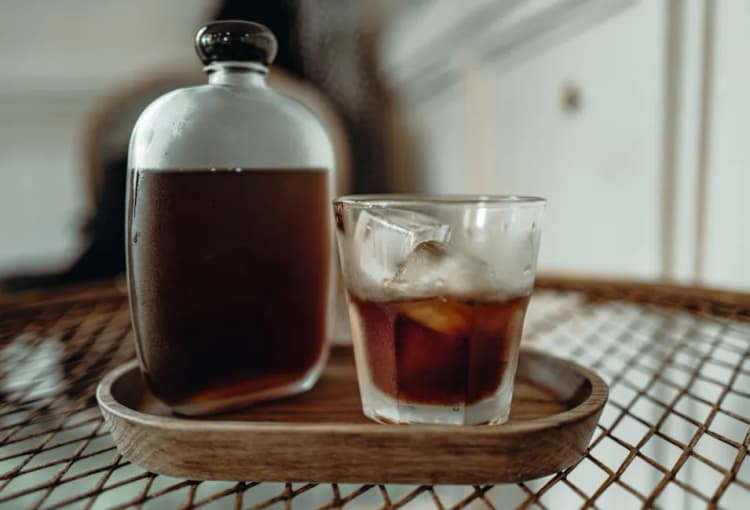
Making cold brew at home is mostly patience and ratio discipline. Get those two things right and the rest — equipment, method, bean choice — has room to vary without ruining the batch.
What You Need
You do not need specialty equipment. The basics:
- Coffee — coarsely ground, as fresh as you can get. Pre-ground works but most pre-ground is too fine.
- Water — filtered or decent tap. Chlorinated water tastes worse after 18 hours of contact than it does in a quick pour-over.
- Container — a mason jar, a large jug, a French press. Glass or food-safe plastic, with enough room to stir.
- Filter — paper (pour-over filter or Chemex), metal mesh (French press plunger), or a clean cloth or nut milk bag. Paper gives the cleanest result; metal mesh is quicker.
- Kitchen scale — measuring by weight rather than scoops matters more here than in most brew methods, because density varies significantly between roasts and grind sizes.
Ratios: Start Here
Cold brew is typically made as a concentrate (strong, diluted before serving) or at ready-to-drink strength (weaker ratio, pour straight over ice). Choose based on how you want to use it.
| Style | Coffee : Water (by weight) | Serving |
|---|---|---|
| Concentrate | 1:4 – 1:6 | Dilute 1:1 with water or milk |
| Ready to drink | 1:8 – 1:12 | Pour over ice as-is |
A practical starting point for most people: 100 g coffee to 600 g water (roughly 1:6). This makes about 500–550 ml of strained concentrate, which stretches to 8–10 serving-size glasses once diluted.
Adjust after tasting your first batch — not before. Most people find they want either a bit more coffee (richer) or more water (lighter). Changing one variable at a time makes it easy to know what made the difference.
Step-by-Step
Step 1: Grind Coarse
Aim for a uniform coarse grind — like coarse sea salt or plunger grind, not powder. Consistency matters more than finding a specific marker on your grinder's dial.
Why coarse? Fine grinds increase surface area dramatically, which makes cold water over-extract faster and creates a silty, difficult-to-filter mess. A uniform grind also filters more evenly — mixed coarse-and-fine grinds leave fines that sneak through most filters.
If you are using a hand grinder, set it a few clicks coarser than you would for a plunger.
Step 2: Combine and Stir
Add grounds to your container, pour in the water, and stir until no dry pockets remain. Dry clumps of coffee sitting above the waterline will under-extract and contribute almost nothing — they just waste coffee.
Some people add the water in two pours with a stir between to make sure everything wets. Either way works.
Step 3: Steep
Cover the container (loosely — it does not need to be airtight) and leave it.
- At room temperature: roughly 12–16 hours. Warmer ambient temperature extracts slightly faster.
- In the fridge: roughly 18–24 hours. Cold slows extraction, so you need more time to reach the same result.
Fridge steeping is less forgiving of over-steeping because the temperature keeps extraction slow — going an extra few hours rarely turns a good batch bad. Room-temperature steeping moves faster and over-steeping is more noticeable.
Taste a spoonful before committing to filtering. Strain a teaspoon through a paper filter and try it (diluted if it is a concentrate recipe). It should taste rich and smooth — if it tastes thin, give it more time. If it tastes harsh or intensely bitter, filter it now.
Step 4: Filter
This step takes longer than people expect.
Pour the slurry through your filter into a clean bottle or jug. Let gravity do the work.
- Paper filter (most common): Set a pour-over dripper or a Chemex over your receiving vessel, add the filter, and pour slowly. Paper traps almost all fines and oils. The result is clean and bright.
- Metal mesh (French press): Press gently, then pour through the mesh into a bottle. You will get some fines in the final cup. A second pass through paper removes them if clarity matters to you.
- Cloth or nut milk bag: Suspend the bag over a jug, pour, and let it drain. Do not squeeze — squeezing forces fines through and introduces bitterness.
Do not squeeze or press the grounds. This is the most common mistake. The slurry holds some liquid, and squeezing recovers it — but it also extracts bitters and fines that a gravity filter would have left behind.
If filtration is very slow (dripping almost nothing), your grind was too fine or there are too many fines. Run the remaining slurry through fresh paper and accept a slightly lower yield.
Step 5: Bottle and Refrigerate
Transfer the strained cold brew to a clean, sealed container and refrigerate immediately. Plain black cold brew keeps for 7–10 days; once you add milk, drink within 2–3 days. For full storage and serving guidance, see the cold brew guide.
Using Your Concentrate
If you brewed a concentrate (1:4 – 1:6 ratio), you need to dilute before drinking. Starting points:
- Black, over ice: equal parts concentrate and water, poured over ice.
- With milk: equal parts concentrate and milk (oat or full-cream both work well). The milk's natural sweetness changes the balance — you may want slightly more concentrate than with water.
- Iced latte style: concentrate, a small amount of water, ice, then milk. This lets you control strength before adding dairy.
- Hot: yes, you can heat diluted cold brew if you want. It will taste different from a hot pour-over but works as a gentler, less acidic hot cup.
Taste your dilution ratio and adjust — do not assume the standard 1:1 is right for your batch, since ratios during brewing affect how strong the concentrate comes out.
Troubleshooting
| Problem | Most likely cause | Fix |
|---|---|---|
| Weak, tea-like | Too coarse, too short, ratio too low | Finer grind (not espresso-fine), longer steep, more coffee |
| Bitter, harsh | Too fine, too long, squeezed grounds | Coarser grind, shorten steep by 2–3 hours, no squeezing |
| Silty, gritty cup | Fines in grind, or mesh filter with fine grind | Grind more uniformly; run through paper filter after mesh |
| Flat, cardboard taste | Stale beans, or batch too old | Use fresher roast; drink within a week |
| Very slow filtration | Grind too fine, or grind too inconsistent | Coarser setting, or filter in smaller pours |
Frequently Asked Questions
Can I make cold brew in a French press?
Yes — it is one of the easiest methods. Add grounds and water, stir, cover (do not press yet), and steep. When done, press gently and pour immediately into a separate container so the coffee does not keep extracting. A second pass through paper improves clarity significantly.
What is the minimum steep time?
Most batches need at least 12 hours at room temperature to taste balanced. Under-steeped cold brew tastes thin, grassy, or sour. If you are in a hurry, room-temperature steeping gets there faster than the fridge.
Can I use pre-ground coffee?
You can. Most pre-ground coffee sold commercially is ground for espresso or filter — both finer than ideal for cold brew. Expect a cloudier result that needs more filtration. If that is what you have, use it, but grind a notch coarser if the batch comes out bitter.
Does the water temperature matter?
Within reason. Room temperature and cold fridge water both work — the difference is mainly in extraction speed. Some people use slightly cooled (not boiling) water to speed things up, though that edges toward different territory. Very hot water is not cold brew; it is just coffee.
For bean recommendations, see best coffee for cold brew. For how the drink compares to iced coffee, see cold brew vs iced coffee.